
A Beginner Resistance Band Workout for Full-Body Strength
One simple session to learn the basics of pushing, pulling, squatting and hinging with bands.
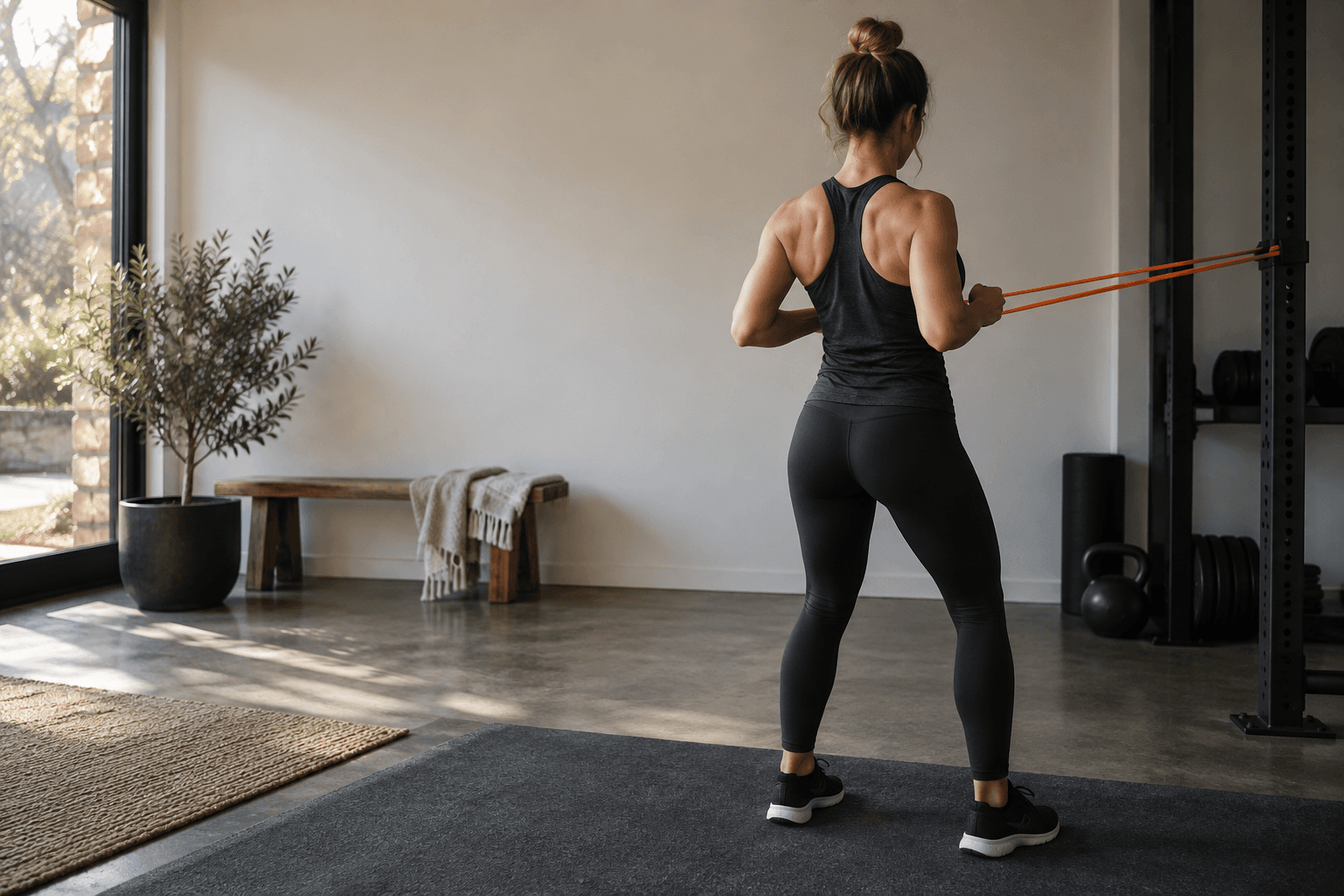
Published: 2026-09-09
Resistance bands are useful because they make a small space feel more versatile. They also reward control: the tension increases as the band stretches, so rushing the final part of a repetition usually makes the movement less tidy, not more effective.
Before you start
Check the band for tears, cracks and worn attachment points. Anchor only to a fixed point that is designed to take load; a loose door handle, furniture leg or improvised fixture is not a reliable anchor. Begin with a resistance that lets you complete every rep with control, then increase tension later.
The 25-minute session
Complete two or three rounds. Rest for 45 to 75 seconds between movements, or longer if your form is becoming rushed.
- Band squat: 8 to 12 reps. Keep your feet rooted and your torso tall.
- Band row: 8 to 12 reps. Pull elbows towards your pockets without shrugging your shoulders.
- Standing band press: 8 to 12 reps. Keep ribs stacked over hips instead of leaning backwards.
- Band hip hinge or pull-through: 10 to 15 reps. Move from the hips, not the lower back.
- Pallof press: 6 to 10 controlled reps per side. Resist rotation as you press the band away.
Finish with five minutes of easy walking, cycling or relaxed mobility. The session should leave you feeling worked, not wrecked.
How to progress
First, make the same resistance feel cleaner: pause for a second at the hardest point, slow the lowering phase or add one or two repetitions. Only then move to a stronger band or a longer set. This is a better progression than chasing fatigue with poor positions.
Common mistakes
The usual mistake is starting too heavy and turning every movement into a fight. Another is allowing the band to pull the body out of position at the end range. Stop a set when you cannot maintain the same posture you had on the first few reps. Consistency and control are the point of a beginner plan.
If you have a current injury, unexplained pain, or are returning after time away from exercise, use this as a conversation starter with an appropriate qualified professional rather than a replacement for individual advice.