
A Minimal Home Functional Training Setup That You Will Actually Use
Build a capable training corner without turning your spare room into a commercial gym.
Published: 2026-09-09
A useful home setup is not defined by how much equipment it contains. It is defined by whether you can train strength, conditioning and movement consistently in the space you have. Start with the sessions you want to repeat, then choose equipment that makes those sessions easier to begin.
Start with the training, not the shopping list
Write down three sessions you would genuinely do in a normal week: one strength session, one conditioning session and one shorter session for busy days. If an item does not earn a place in at least two of those sessions, it can wait. This stops a home setup becoming a collection of single-use purchases.
The minimum viable corner
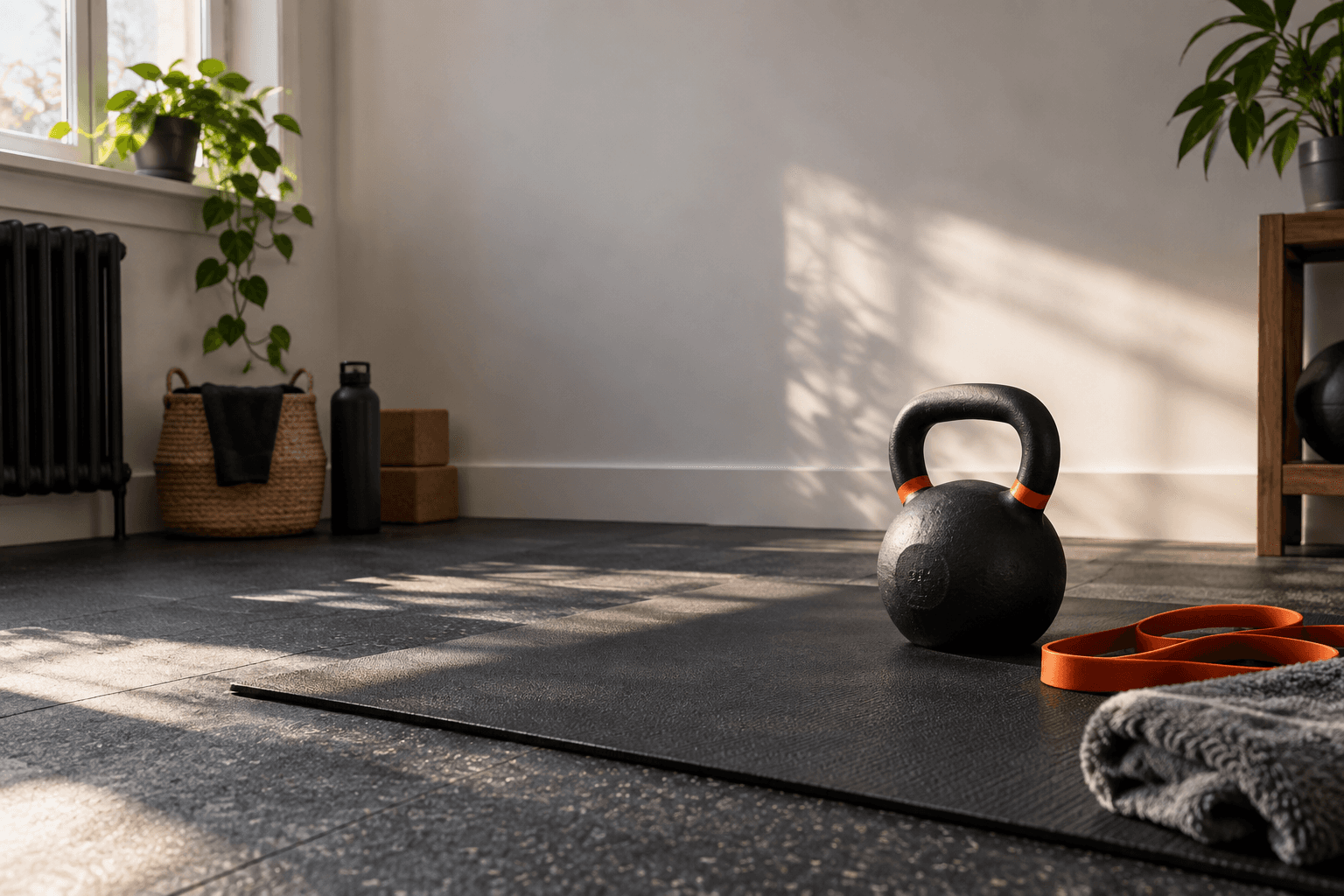
For most beginners, a clear floor area, a mat, a resistance-band set and one manageable load are enough to create variety. Bands cover pulling, pressing, squatting assistance and carries. A single dumbbell or kettlebell can support hinges, goblet squats, rows, presses and loaded carries. Add a skipping rope only if you enjoy using it; it is not compulsory conditioning equipment.
Keep the setup visible and easy to reach. Equipment stored in a cupboard at the far end of the house has more friction than equipment already laid out by the mat.
Build around movements
- Squat: bodyweight, goblet squat or band-assisted squat.
- Hinge: hip hinge, Romanian deadlift or band pull-through.
- Push: incline press-up, floor press or band press.
- Pull: supported row, band row or face pull.
- Carry and brace: suitcase carry, dead bug or plank variation.
You do not need to master every variation at once. Pick one movement from each line, use sensible form and make the session repeatable.
Make the space easier to return to
Set a 30-minute default session: five minutes of warm-up, four main movements and five minutes of easy conditioning. A short, reliable session beats an ambitious plan that requires perfect circumstances. Keep a note of the load, sets and reps so the next session starts with a decision already made.
When to add more equipment
Add equipment only after you can name the constraint it removes. More load may be useful when your current squat, hinge and row variations no longer feel challenging. A second band may help when your current one is too light or too heavy. A bench, rack or large weight set makes sense only when your training pattern and space justify it.
The goal is not a showroom. It is a setup that makes you more likely to train this week.