
Functional Strength With Dumbbells: Five Movements to Learn First
Use one or two dumbbells to practise the movement patterns that carry into everyday training.
Published: 2026-09-09
Dumbbells are not magic, but they are flexible. They let each side of the body work independently, are easy to adjust around a small space and make it straightforward to scale a movement to your current ability.
Pick movements, not muscle groups
A simple home session should cover a squat, hinge, push, pull and carry or brace. This gives you a useful whole-body base without needing a complicated split or an hour of equipment changes.
Five movements
- Goblet squat: hold one dumbbell close to your chest, sit between your hips and stand with the whole foot connected to the floor.
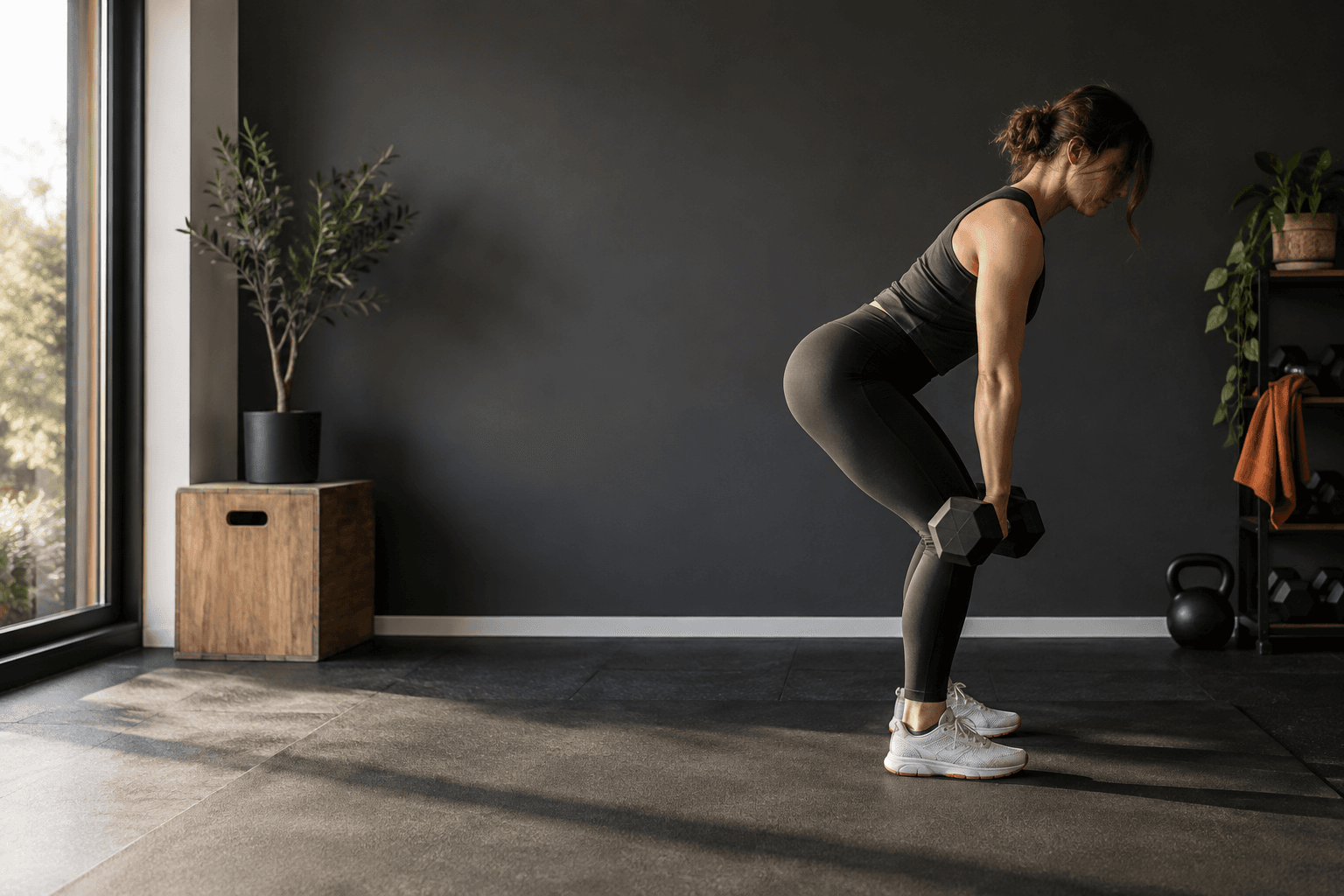
- Romanian deadlift: hold the dumbbells close to your legs, soften the knees and send the hips backwards while keeping the spine long.
- Floor press: lie on the floor and press with control; the floor limits the range and can make the movement easier to learn.
- Supported one-arm row: support one hand on a stable surface and pull the dumbbell towards your hip without twisting.
- Suitcase carry: hold one dumbbell at your side and walk slowly, resisting the urge to lean away from the load.
A repeatable 30-minute session
After a short warm-up, perform three sets of six to ten controlled repetitions of the squat, hinge, press and row. Finish with two or three short suitcase carries per side. Rest long enough that the next set looks like the last one. If your posture changes dramatically, reduce the load or repetitions.
Progress without rushing
Add a repetition, a set, a little load or a slower lowering phase—but only one variable at a time. The simplest training log records the exercise, load, repetitions and how the final set felt. This is enough to make the next decision based on evidence rather than guesswork.
Keep the claim honest
Functional strength is not a special category of exercise. It means practising strength in movements that help you move with control, tolerate load and build confidence for the activities you care about. The right dumbbell session is the one you can repeat safely and steadily.